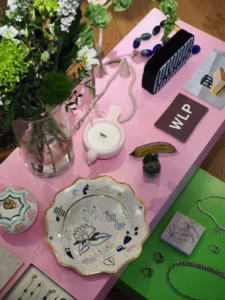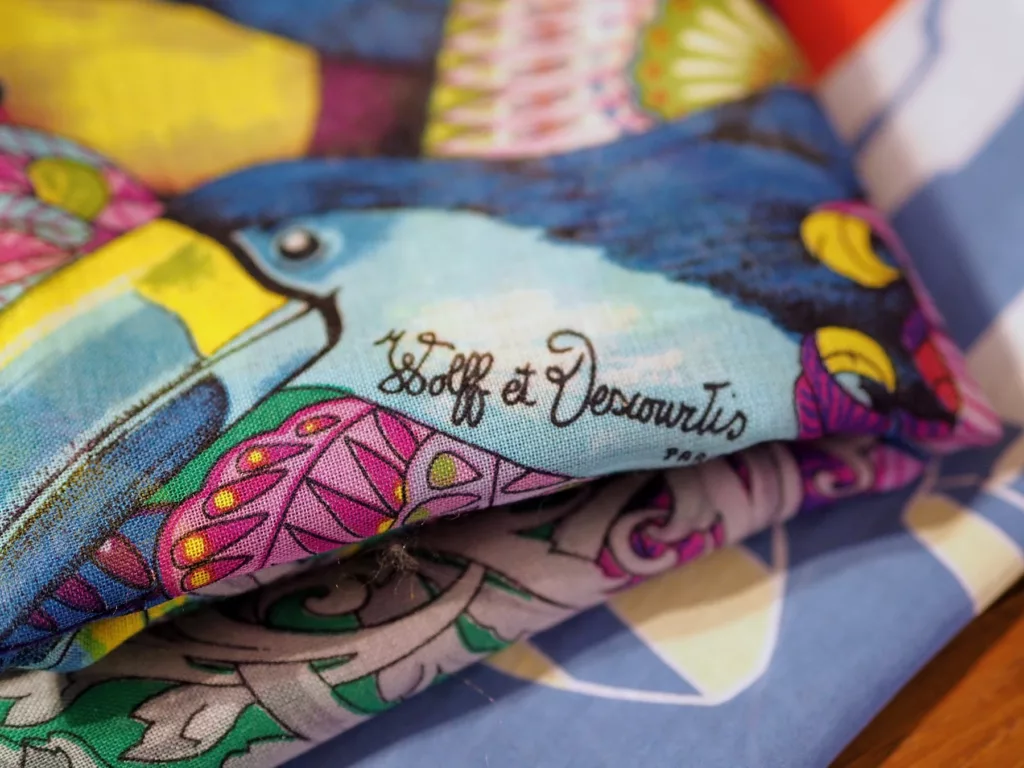
In the heart of the Galerie Vivienne in Paris, Victoria Wolff has stewarded a house that for nearly 150 years has maintained standards that luxury conglomerates abandoned. We spoke with her about how a collapsing textile business became a destination for the world’s most discerning collectors—through uncompromising commitment to beauty.
Built on movement
The house’s story begins with upheaval. When the German annexation of Alsace shattered his livelihood, Joseph Wolff traveled to Normandy and founded Wolff & Cie in 1875. For generations, the family supplied the finest fabrics to tailors across Europe. But by the 1950s, that era was ending. The company moved to Paris in Galerie Vivienne. By the late 1980s, when Victoria took over, it was collapsing.
From fabric to shawls
Victoria had no money, only a name and an idea: open to the public. She traveled to Lake Como, where the world’s finest textile printers had never understood how their work reached real people—only corporations. They agreed to supply her on consignment. From Lyon, she sourced fabrics where ancient jacquard techniques remain unchanged.
During the Gulf War crisis of 1990, commissions stopped. Victoria cut excess fabric into large squares, finishing them carefully. “I thought maybe I could sell these as scarves. Then I sold more scarves than bolts of fabric.” Necessity became signature.
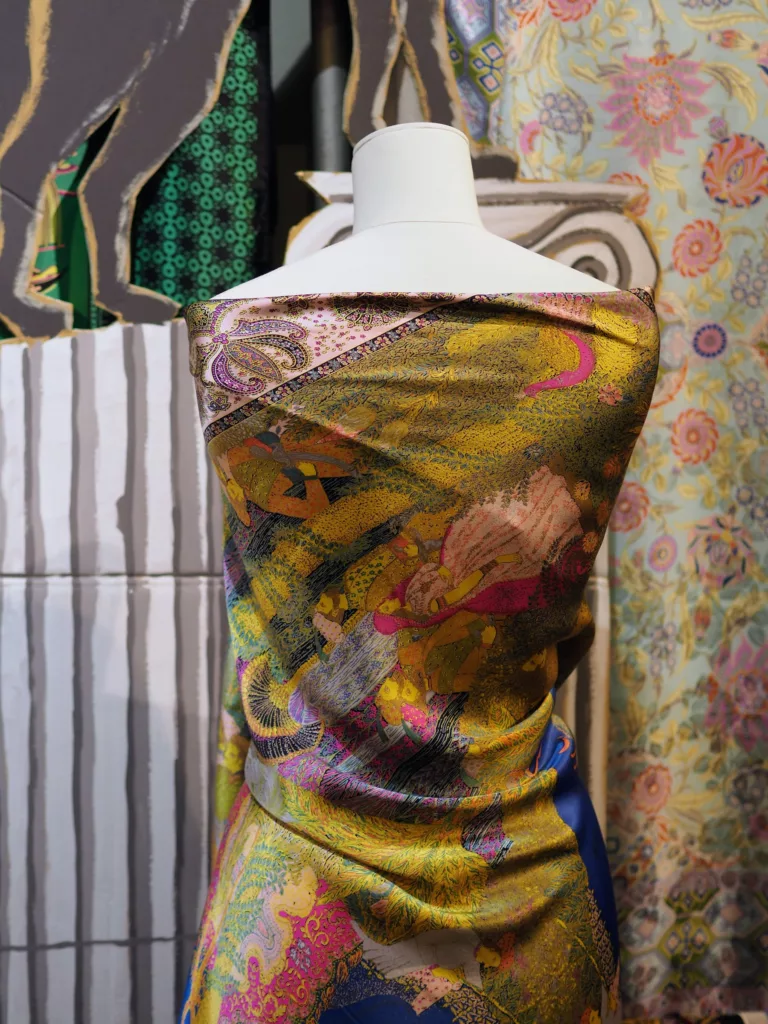
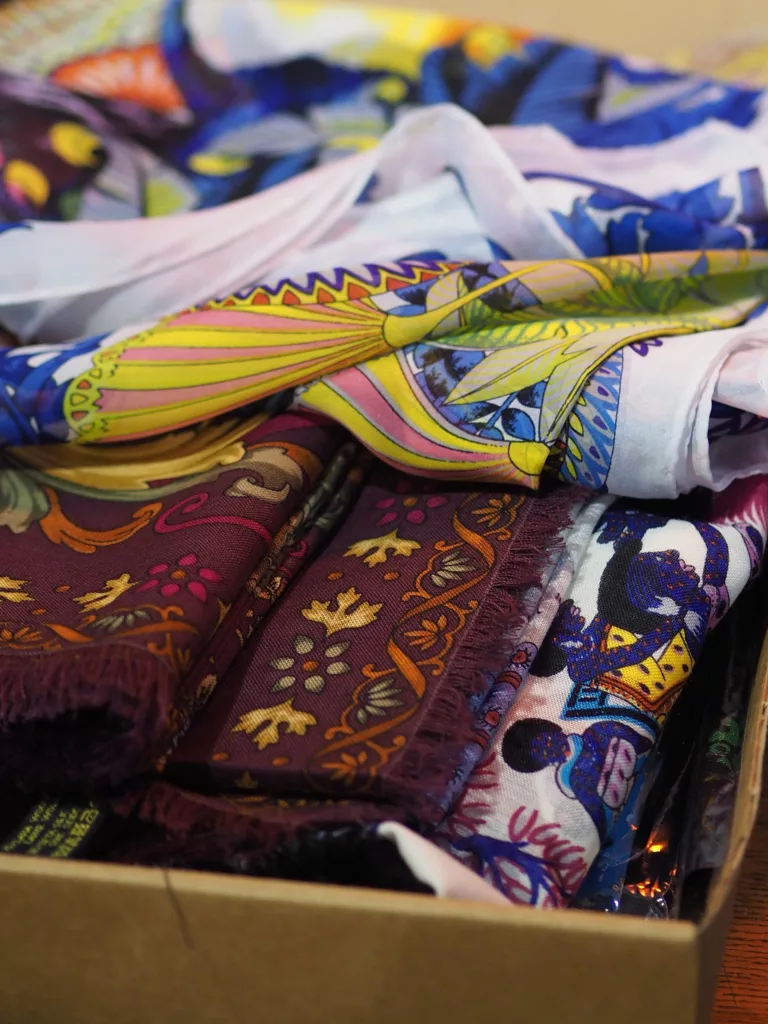
These shawls are meters of museum-quality pieces, printed using frame-printing—a labor-intensive technique producing depth impossible to achieve digitally. Each color requires its own silk screen carved by hand. Victoria acknowledges this technique is dying: “The screens will disappear. It costs too much. The next generation will work in digital. That’s how it must be.”
Yet on her website, she explicitly notes which pieces are frame-printed and which are digital. “Many brands don’t write it. But people should know. There’s a profundity to frame printing you cannot achieve otherwise—it’s depth in the details, the colors. I see it immediately.”